
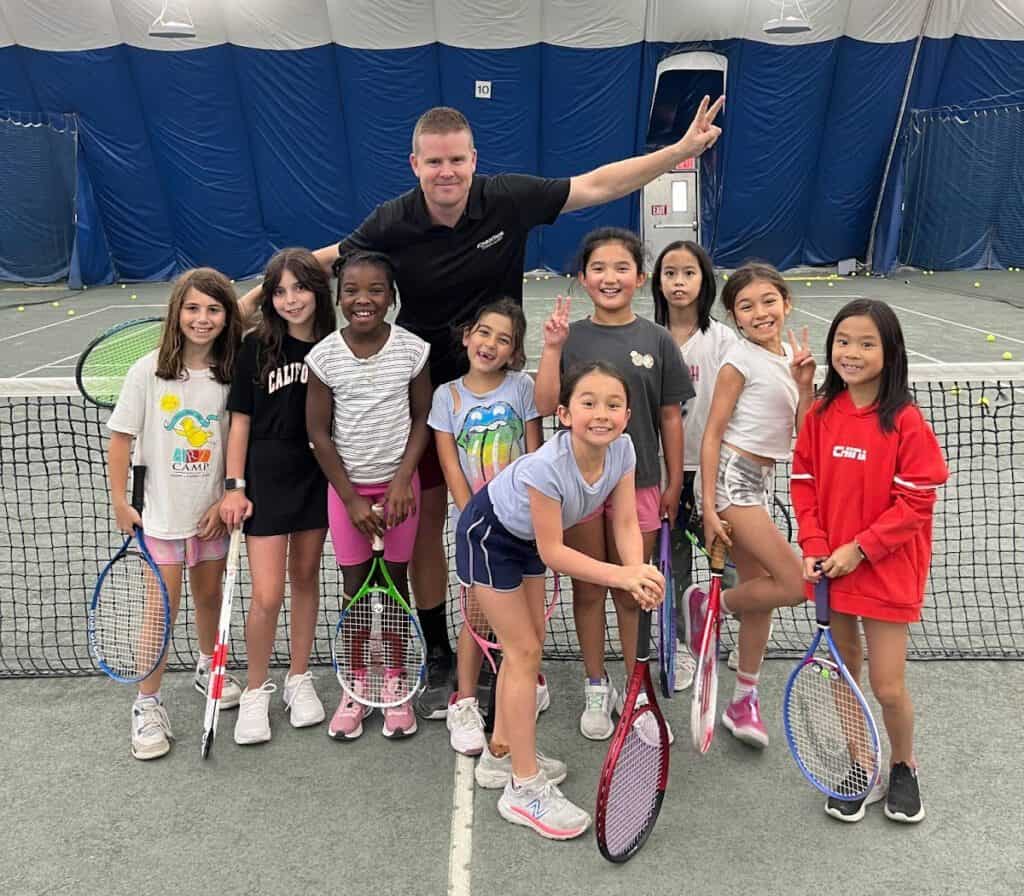
Our organization was recently asked to contribute an article to the September issue of New York Tennis Magazine. Given his work coaching junior athletes and building what has become one of New York’s most successful tennis programs for youth players, we asked Icelandic legend Magnus Gunnarsson to share some words of wisdom. His insights below shed invaluable light on how to prepare young players for everything from a fundamental enjoyment of the sport to developing the proper mindset for future college tennis recruitment opportunities.
An interview with Magnus Gunnarsson, Advantage Junior Program Director

What should parents look for in a junior tennis program?
“Tennis is a unique sport because players are alone on the court facing some of the most challenging situations in sports. They have to manage physical demands, execute their technique, make tactical decisions, control their emotions, and solve problems in real time.
A strong junior tennis program should prepare players for those moments by teaching them not only how to hit the ball, but also how to think, compete, adapt, and become independent.
A successful program should have a clear curriculum that develops every area of the game: technical skills, tactical awareness, physical development, mental strength, and competitive experience. The goal isn’t just to perform well in practice, but to take what is learned on the practice court and apply it in match play.”
How do parents recognize a strong program that will set up their child for success?
“In my opinion, every great program starts with structure. What parents should look for in tennis programs for kids is a clear development pathway, from beginning tennis lessons through high performance, tournament training, college tennis recruiting, and beyond.
The best programs aren’t just a collection of classes; they have a long-term vision for every player. Coaches should know where a player is in their development, what they need to improve next, and how to help them get there.
The coaching staff also makes a huge difference. Great coaches pay attention to details, understand each player’s individual needs, and create an environment where players feel supported while still being challenged. A junior program should feel like a player’s second home, somewhere they’re excited to come, improve, and enjoy the process.
Parents should also look for coaches and directors who are accessible. Open communication helps families understand the development process, training expectations, tournament opportunities, and the next steps for their child.”
How can a child become competitive at a high level and pursue future college opportunities?
“Becoming a high-level player requires talent, but talent alone isn’t enough. It also takes commitment, consistency, discipline, and a genuine desire to improve.
I often tell my players they need to “win the day.” That means making the most of every practice, every workout, every match, and every decision away from the court. Long-term improvement comes from consistently putting together good days over months and years.
Competition through USTA and UTR events becomes an important part of development because tournaments teach lessons that practice simply can’t. Players learn how to manage pressure, solve problems, compete against different opponents, and adapt throughout a match.
Competition shouldn’t be rushed. Every player develops differently, and tournaments should be introduced when the player is emotionally, technically, and physically ready. The goal isn’t just to boost junior tennis rankings by winning matches, it’s to learn from them and continue improving.”
What should parents look for beyond wins and junior tennis rankings?
“This is one of the biggest things I discuss with parents as someone coaching their kids in tennis.
Wins and rankings matter, but they don’t tell the whole story. I encourage parents to ask different questions:
- Is my child giving their best effort?
- Are they becoming a better problem solver?
- Are they improving their attitude and resilience?
- Are they becoming more confident and independent?
Those qualities often predict long-term success far better than early results.
One of the biggest mistakes I see is parents trying to solve every problem for their children. Instead of telling your child what they should have done after a match, ask questions like, “What did you notice?” or “What would you try differently next time?”
Tennis is built on problem-solving. If players are constantly being told what to do, they never fully develop one of the most important skills they’ll need during competition. Learning to think independently doesn’t just make better tennis players, it builds confidence that carries into everyday life.”


Why is a clear player development pathway important?
“A clear pathway gives players and families a roadmap. It helps them understand where they are, what they’re working toward, and what comes next.
Whether a player starts at four years old or joins later, they should always know what skills they need to develop before moving to the next level. That structure keeps players motivated while helping families understand that tennis development is a long-term process.
Players don’t become advanced overnight. They improve one step at a time, and a strong pathway provides direction throughout that journey.”
When should junior players begin competing in USTA tournaments?
“There isn’t one perfect age because every child develops differently.
Modified competitions like Red Ball and Orange Ball tournaments are great ways to introduce younger players to competition in an age-appropriate environment. For many players, somewhere around ages 7 to 9 is a good time to begin competing, but the right time depends more on the individual than on their age.
The most important thing is that tournaments are introduced in a positive, supportive way. Early competition should build confidence, encourage learning, and help players develop a love for competing, not create unnecessary pressure.”
How do good coaches balance fun with long-term improvement?
“Fun looks different for every player. Some kids enjoy being active with friends, while others love competing and pushing themselves to improve.
A great program understands both. Not every player wants to compete in high school, college or professionally. The responsibility of a coach is to create the right environment for every player to grow, regardless of their goals.
That means providing the right level of challenge, maintaining a positive culture, and helping players build a lifelong relationship with the sport.
At the end of the day, I believe the best junior programs do much more than produce better tennis players. They help young people become confident, resilient, disciplined, and independent, qualities that will benefit them long after they leave the tennis court.”
Learn More About NYC Tennis Programs for Youth Athletes
Interested in one of our world-class pros coaching your kids in tennis? Explore Junior Red Ball, High Performance, or any of our other tennis programs for youth players to learn more about each offering.
Please also feel free to contact us for more information or stop by any of our three New York City club locations. We look forward to joining you on your tennis journey!